Behind the Mask:
A Guide to Watching Kathakali the Right Way
27 December 2025
Kathakali isn't theatre—it's a400-year-old ritual where gods, demons, and mortals battle it througheye-popping costumes, thunderous drums, and faces painted like living myths.But tourists often miss half the magic because they don't know the code. Here'show to watch it like someone who gets it.
Where to catch the real deal
Skip the 1-hour "tourist specials." Gofor full-night performances at traditional spots: Kerala Kalamandalam(Thrissur), Kutiyattam Sangari (Guruvayoor), or village temples during festivalseason. Northern Kerala villages around Ottapalam and Pattambi host authenticshows where locals fill half the audience. These aren't polished—they're raw,hours long, and unforgettable.
Timing and what to expect
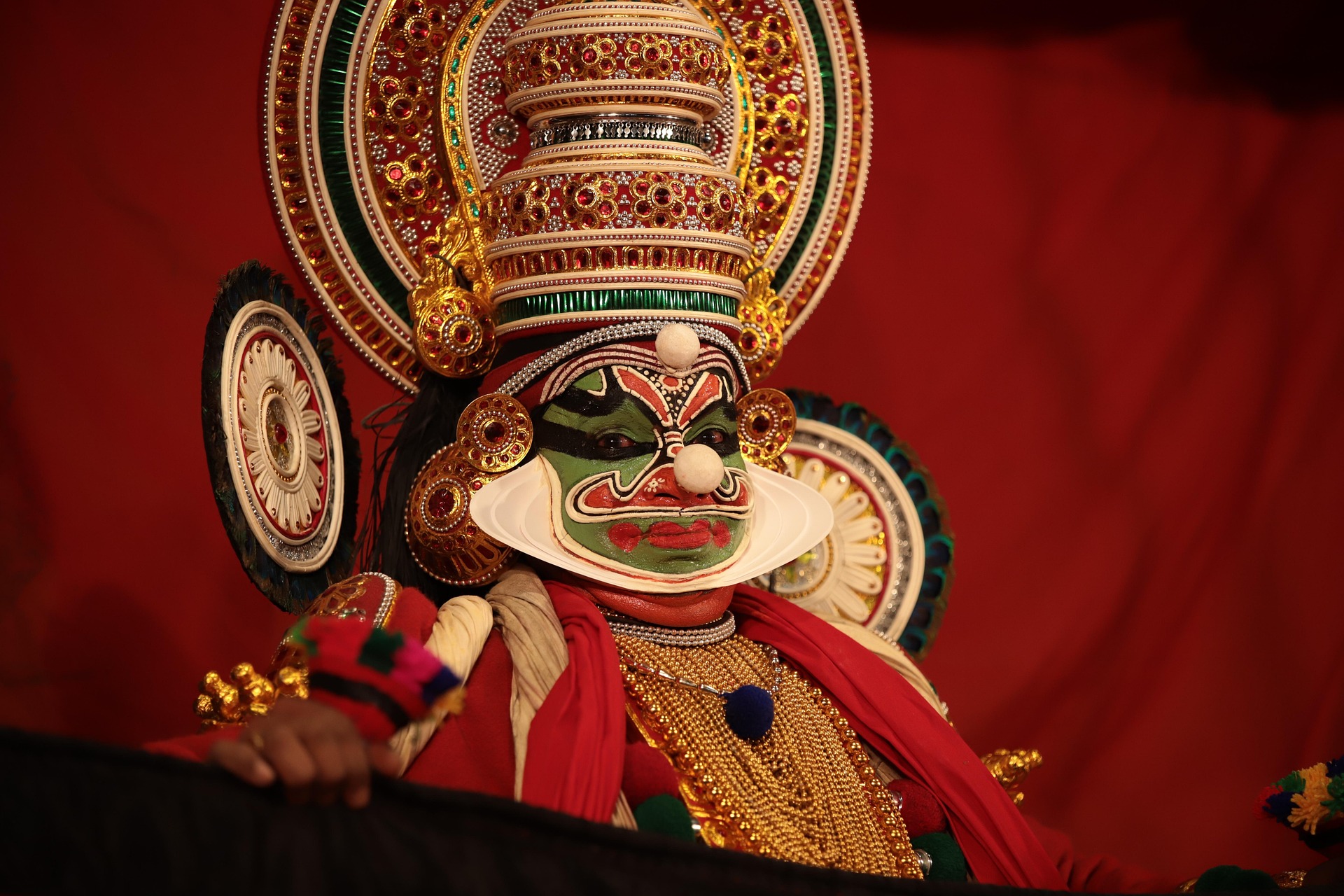
Shows start 9-10 PM, run till dawn (though tourists usually leave by midnight). First 30 minutes? Makeup. Watch it.Artists transform from normal faces into divine beings using rice paste, green(noble), red (evil), black (hunter), white (otherworldly). The transformation ritual sets the mood—you're not watching actors, you're witnessing devotion.
How to read the faces and mudras
Forget subtitles. Kathakali speaks through eyesand hands. Key codes:
● Eyes: Wide open = alertness/anger. Half-closed = sorrow. Rollingside-to-side = contemplation.
● Eyebrows: Raised high = surprise/divine power. Furrowed = rage.
● Mudras (hand gestures): 24 basic poses tell entire stories. Pointing up= sky/gods. Palms facing = prayer. Interlocked fingers = snake.
● Shoulders/Neck: Trembling shoulders = bird. Neck shakes = demon laugh.
Pick one character and follow their eyes. Thestory reveals itself.
The soundscape that drives it
Two chenda drums pound the rhythm—war, love,death. The maddalam softens for romance. Elathalam cymbals puncture tension.Singers chant in Manipravalam (Sanskrit-Malayalam mix). Don't fight the sound;let it pull you into the myth. Close your eyes during drum solos—visuals hitharder when they restart.
What localsactually do
Villagers bring food, chat during breaks, clapfor favorite characters. Tourists sit stiffly. Loosen up—laugh when localslaugh, nod when they nod. During seed scenes (comic interludes), they'llinvolve audience members. Go with it. Kids often mimic mudras from the frontrow—pure joy.
Best way toprep
● Read the synopsis beforehand (usually Mahabharata/Ramayana stories).
● Sit on floor mats if offered (best view).
● Arrive hungry—post-show tea shops serve pathiri and payasam.
● Weekday village shows beat weekend tourist centers.
Don't missthese signature moments
Pacha character entrance: Green-faced hero/protagonist enters with trembling shoulders, bulging eyes—electric.
Kathi (knife) villain rage: Red-circled eyes rolling, sword gestures slashing air.
Love scene mudras: Delicate hand movements between lovers, drums go soft.
Demon transformation: Black-faced character suddenly expands chest, neck shakes violently.
Kathakali rewards attention. One night well-watched beats ten nights half-seen. Come empty-handed, leavehalf-enchanted.